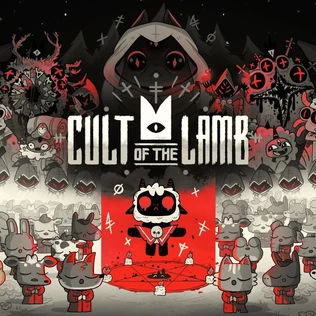
The Beast
A shadowy, soul-devouring horror that seeks to extinguish all light and faith.
The Beast is a colossal, shadowy entity that serves as the primary antagonist and final obstacle in the journey of the Lamb. It is an ancient force of corruption that has been manipulating the world from the darkness for centuries, seeking to consume all souls and extinguish hope. While it often appears as a monstrous, multi-limbed horror with glowing eyes, its true nature is that of a parasitic god-like presence feeding on faith and fear.
- Affiliation
- The False Idol (Physical Manifestation)
Lore & Background
In the final confrontation, the Beast reveals its true form: a towering nightmare of shadow and bone, wielding immense power over the land. It challenges the Lamb not just in strength but in spirit, testing whether faith can truly overcome despair. The entity represents the ultimate test of devotion, forcing followers to choose between the comfort of blind obedience or the terrifying freedom of truth. Its defeat marks the end of an era of darkness and the beginning of a new path for the faithful.
In Their Own Story
The wind howled through the ruins of the old temple, carrying whispers that sounded too much like laughter. The Lamb stood before the gaping maw of the cavern, where shadows coalesced into a shape far larger than any beast known to man. Eyes ignited in the dark, burning with a hunger that had waited eons. 'Join me,' the voice echoed, not from a mouth but from the very air itself. 'Or be consumed.' The Lamb raised its weapon, not out of fear, but with the steady resolve of one who knows the light must always return.
Reader's Guide
The Beast is the culmination of all the cults and false idols that have risen throughout the game's history. It acts as a parasitic force, feeding on the souls of the faithful to maintain its existence and expand its influence across the land. Its members are not traditional followers but rather corrupted entities—twisted versions of past cult leaders and monsters who have been consumed by its darkness. These minions serve as extensions of its will, spreading fear and doubt wherever they go. The goal of The Beast is absolute domination: to consume every soul in the world and plunge existence into eternal night. It opposes the Lamb's mission to build a true community based on genuine faith rather than coercion. In the conflict, it serves as the final boss, representing the ultimate challenge for any cult leader who dares to stand against the darkness. Defeating it requires not just combat prowess but unwavering belief in one's own path.
Did You Know?
- The Beast is often depicted with multiple eyes and limbs, symbolizing its all-seeing and grasping nature.
- Contrary to popular belief, The Beast does not disguise itself as other idols; entities like the Sun and Moon are distinct corrupted minions encountered prior to the final confrontation.
- Its defeat is tied directly to the Lamb's ability to inspire true faith rather than fear-based worship.
- The entity represents the antithesis of the game's core theme: that faith should be a choice, not a cage.
Origins and Symbolic Imagery
The Beast from the Sea emerges directly from the oceanic depths in Revelation 13, a setting that mirrors the four kingdoms rising from the sea in Daniel's prophecy. This entity is visually constructed as a terrifying hybrid, possessing the body of a leopard, the feet of a bear, and the mouth of a lion. These features correspond to three specific animals found in Daniel chapter seven, though they appear here in reverse order. The creature is further distinguished by having seven heads adorned with crowns and ten horns, numbers that align precisely with the total count of heads and horns described in Daniel's vision. This detailed physical description suggests a deliberate symbolic connection between the apocalyptic beasts of Revelation and the historical kingdoms foretold earlier. By combining these distinct animal traits, the text presents a figure of composite power and authority that draws its legitimacy from ancient prophetic traditions while introducing new elements of cosmic conflict.
The Antichrist's Authority and Blasphemy
Empowered by the Dragon, who is later identified as Satan, the Sea Beast receives its throne, power, and great authority to rule for a specific period of forty-two months. During this reign, the beast engages in open blasphemy against God, His name, and His dwelling place, speaking arrogant words that echo the boastful mouth of the little horn in Daniel's vision. Its influence extends over all peoples, tribes, tongues, and nations, granting it dominion to persecute the saints who refuse to submit. A pivotal moment in its narrative involves a fatal head wound that is miraculously healed; this supernatural recovery bewitches the entire world, leading populations to worship both the beast and the Dragon who empowered it. This healing event serves as a catalyst for global deception, convincing humanity to follow the creature despite its violent nature and blasphemous speech.
The False Prophet and Economic Control
While the Sea Beast rules from the sea, a second entity known as the Beast from the Earth or the False Prophet arises with two horns resembling a lamb yet speaking like a dragon. This figure acts as an enforcer for the first beast, exercising all its authority to compel worship through miraculous signs, including calling down fire from heaven. The False Prophet deceives humanity into creating an image of the wounded Sea Beast and mandates that anyone refusing to worship this image faces death. Furthermore, this entity institutes a strict economic system where buying or selling is impossible without receiving the mark of the beast on one's right hand or forehead. This requirement forces a choice between survival and faithfulness, effectively binding the population to the beast's authority through both religious coercion and commercial necessity.
Eschatological Defeat and Final Judgment
The narrative arc concludes with the ultimate defeat of these evil powers during the end times. The Sea Beast and the False Prophet ally with the Dragon to gather earthly kings for the battle of Armageddon, seeking to destroy God's people. However, their campaign ends in failure when Christ returns; both beasts are captured and cast alive into a lake of fire burning with sulfur. Their fate contrasts with that of the Dragon, who is initially imprisoned in the bottomless pit for a thousand years before being released for one final deception. After this last rebellion, Satan too is thrown into the lake of fire to join his allies. This sequence ensures that all opposition to God, represented by these three figures, is permanently eradicated, securing victory for the saints and establishing divine justice.
Frequently Asked Questions
Who is The Beast?
It is a colossal, shadowy entity that serves as the final antagonist in the Lamb's journey. This ancient force of corruption seeks to consume all souls from the darkness.
What are The Beast's powers and role?
It acts as a parasitic presence that feeds on faith and fear to maintain control over the world. Physically, it manifests as a multi-limbed horror with glowing eyes used to terrorize opponents.
How does The Beast's story end?
The Beast is defeated by the Lamb after a climactic battle at the conclusion of the game. This victory extinguishes its influence and saves the world from total domination.
Why is The Beast important to the plot?
It serves as the primary driver for the cult's conflict and the pilgrimage across the land. Its existence necessitates the Lamb's rise to challenge the False Idol's rule.
Which faction does The Beast belong to?
The Beast aligns with the Darkness and operates through the hierarchy of the False Idol. It represents the ultimate corruption opposing the true faith of the Lamb.