The Acolyte
Faithful Followers who build, fight, and pray for their new god.
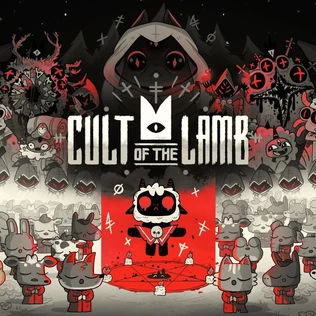
Followers are generic but essential members of The Lamb's growing congregation, serving as the primary workforce for building and maintaining the cult's sanctuary. While initially appearing as faceless figures in robes, they represent the faithful souls who have been converted from their previous lives to serve the new deity.
- Role
- Cult Member / Laborer
- Affiliation
- The Cult of the Lamb
- Leader
- The Lamb (Player)
- Origin
- Converted Villagers or Captives
- Status
- Active Servant
Lore & Background
Their existence is defined by a cycle of devotion and duty. By day, they toil under the sun to construct grand altars, expand the temple grounds, and harvest resources necessary for the cult's survival. By night or during times of conflict, they transform into zealous defenders, wielding crude weapons and sheer numbers to repel invading forces. Despite their uniform appearance, each Follower is assigned a unique generated name visible in the management interface, highlighting that their collective faith—anchored by individual identities—is what allows The Lamb to ascend from a small sect to a dominant power across the land.
In Their Own Story
The mud was thick on the fresh stones of the new altar as Acolyte number four dragged the heavy timber into place. It didn't matter that his hands were blistered or that he remembered a different life before the robes; here, there was only the rhythm of the chisel and the chanting voice of The Lamb echoing from above. When the shadow of a rival cultist fell across the courtyard, the Acolyte did not flinch. He dropped the wood, picked up his jagged spear, and stepped forward into the fray, a nameless face in a sea of hoods, ready to bleed for the god who gave him purpose.
Reader's Guide
The Acolyte serves as the backbone of the player's operations, functioning as both a builder and a soldier. Initially recruited from local villages or captured during expeditions, they are stripped of their former identities to become uniform followers. Their primary role involves resource management and infrastructure expansion. Players assign them tasks such as mining, farming, crafting, and constructing buildings like the Barracks or Altar of Faith. Without their labor, the cult cannot grow or sustain its rituals. In combat scenarios, Acolytes act as a defensive force. They can be equipped with basic weapons to guard against invasions from rival cults or monsters. Their effectiveness scales with the number of followers and the quality of equipment provided by The Lamb. A defining moment for any Acolyte is their conversion ceremony, where they pledge eternal loyalty. This arc represents the loss of individuality in exchange for collective strength, a core theme of the game's narrative.
Did You Know?
- Followers can be sacrificed on altars to unlock powerful rituals or gain immediate resources.
- Their morale and happiness levels directly impact their work efficiency and willingness to fight.
- Different Followers may have unique traits that make them better suited for specific tasks like farming or combat.
- The number of Followers determines the maximum capacity for certain buildings and rituals.
Origins and the Curse of Immortality
The narrative foundation of this series rests on the tragic transformation of Casca Rufio Longinus, an Etrurian soldier whose life irrevocably changed at Golgotha. Originally a member of the Roman 7th Legion, Casca was assigned to the execution detail for Jesus of Nazareth. In a misguided attempt to alleviate suffering, he drove his spear into Christ's side, an act that triggered a divine condemnation rather than a release from pain. As blood trickled onto Casca's hand and he tasted it upon wiping his mouth, he was cursed with immortality, destined to remain a soldier until the Second Coming. This curse manifests not as a blessing but as a cycle of agony; while his body heals rapidly from fatal wounds like stab injuries or beatings, he retains every scar and feels the full intensity of the pain. His early life in Falerno ended when plague claimed his family, leading him to enlist, yet his true journey began with this supernatural sentence that forces him to wander history as an unaging warrior.
A Mercenary Through History
Doomed to remain a soldier without aging, Casca becomes a perpetual mercenary who navigates the violent tapestry of human history. Lacking marketable skills beyond combat, he joins various armed forces across millennia, often fleeing before his immortality is discovered. His service record spans from ancient Rome under Emperor Nero to the conquests of Cortez in Mexico and the battle of Điện Biên Phủ. Unlike a traditional patriot, Casca fights for ideals rather than nationalism, serving in contradictory factions including the Confederate States Army, the Wehrmacht, the Red Army, and the French Foreign Legion. His existence is marked by constant movement; after gaining freedom as a gladiator under Nero, he was later sold as a galley slave before escaping a sinking warship to continue his wandering. Throughout these centuries, he encounters legendary figures such as Genghis Khan, Attila the Hun, and George Washington, serving as a silent witness to humanity's most significant conflicts while remaining bound by his eternal military role.
The Brotherhood of the Lamb
Casca is relentlessly pursued by the Brotherhood of the Lamb, a fanatical sect that serves as the series' primary antagonist. Founded by Izram, who claimed to be the thirteenth Disciple after purchasing the Holy Lance from Casca's comrades, this group worships the spear and awaits the Second Coming. Their doctrine demands they keep Casca alive to ensure he meets Jesus again, yet they simultaneously torture him for his role in the Crucifixion. The Brotherhood's hierarchy includes an elder and twelve brothers who prioritize power over compassion, even reenacting the crucifixion by killing one of their own members with the Lance during holy days. Their persecution has led to horrific events, such as burning Casca at the stake or amputating his hand. In retaliation for the murder of his adopted family in *The Sentinel*, Casca executed Elder Gregory by crucifixion, highlighting the brutal, cyclical violence between the immortal soldier and the zealots who hunt him.
Chroniclers and Literary Evolution
The story of Casca has been preserved through a lineage of biographers who document his impossible life. The first to uncover his secret was Major Julius Goldman, a U.S. Army surgeon in Vietnam who treated Casca for injuries that should have been fatal. Recognizing the significance of the immortal soldier, Goldman became his chronicler before leaving the military to establish a private practice. As Goldman aged, he introduced Casca to Danny Landries, the son of a former comrade, who eventually took over the role of biographer in later entries. Thompson joined as a co-writer in 2026 for *The Guardian*, ensuring the saga continues to explore Casca's eternal journey across different eras.
Frequently Asked Questions
Who is The Acolyte in Cult of the Lamb?
The Acolyte represents the converted villagers or captives who join your congregation as faithful servants. They appear as faceless figures in robes, symbolizing their total devotion to you as their new deity.
What is the primary role of an Acolyte?
These members serve as the essential workforce responsible for constructing buildings and maintaining the sanctuary's infrastructure. Beyond labor, they also participate in rituals and can be deployed to fight enemies during expeditions.
How do villagers become Acolytes?
Former villagers or prisoners are transformed into Acolytes through conversion, where they abandon their old lives to serve your cult. This process turns them from potential threats or neutral NPCs into loyal followers dedicated to your will.
Why are Acolytes important for gameplay progression?
Without a steady supply of Acolytes, you cannot expand your base or unlock new structures required for advancement. Their numbers directly dictate how quickly you can grow the cult and prepare for holy wars against other factions.
Do Acolytes have individual names or personalities?
In the standard gameplay loop, Acolytes are treated as a collective group without unique names, faces, or distinct backstories. They function primarily as a resource pool rather than individual characters with personal arcs.