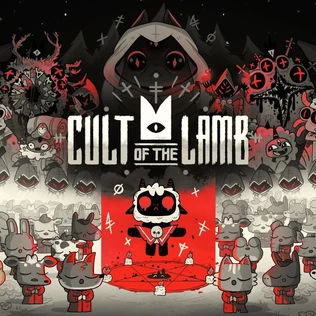
Sacrifice Altar
A stone slab where faith is forged in blood and life force fuels the cult's rise.
The Sacrifice Altar stands as the most ominous and essential structure within a Lamb's burgeoning cult, serving as the focal point for blood rites and devotion. Unlike other buildings that provide resources or comfort, this monolithic stone slab is dedicated to the transfer of life force from the faithful to their leader. It represents the dark bargain at the heart of the cult: faith is proven not just through words, but through the ultimate offering of one's own vitality.
- Primary Function
- Sacrificing Believers to generate Faith, which is used to purchase Powers
- Unlock Condition
- Acquired via the Sacrifice Altar Artifact found in randomized dungeons (e.g., Forest, Caves)
- Key Mechanic
- Converts Believers exclusively into Faith
Lore & Background
The history of these altars predates the current Lamb, echoing through the ruins of fallen heresies and ancient temples. It serves as a grim reminder that in this world, devotion is measured by sacrifice. The artifact itself, which allows the construction of such an altar within the cult's grounds, is often found in the depths of dungeons or hidden chambers where previous false prophets met their end. By placing it at the heart of the settlement, the Lamb asserts dominance over life and death, turning the community into a living battery for their growing ambition.
In Their Own Story
The rain fell softly on the muddy grounds of the new temple, masking the sound of heavy footsteps approaching the stone slab. A young believer, eyes wide with a mix of terror and fervor, knelt before the altar. The Lamb stood above, its silhouette stark against the grey sky, holding the ritualistic dagger not as a weapon of war, but as an instrument of grace. 'For the faith,' the Lamb whispered, though no one heard it over the wind. As the blade descended, there was no scream, only a sudden, warm glow that erupted from the altar, illuminating the darkening sky with the promise of power.
Reader's Guide
The Sacrifice Altar is a critical building for any ambitious cult leader seeking to expand their influence and abilities. Once constructed using the Sacrifice Altar artifact, it becomes the central hub for converting believers into tangible resources. To use the altar, the Lamb must interact with it while believers are present in the settlement. The player can choose to sacrifice a specific number of followers at once or individually. Each sacrificed believer is permanently removed from the population but grants a significant amount of Faith, which is used to unlock new rituals and abilities. Furthermore, sacrificing believers on this altar unlocks permanent passive bonuses for the Lamb's combat stats, such as increased damage or health regeneration. It is a high-risk, high-reward mechanic; while it boosts power, it reduces the workforce available for building and resource gathering.
Did You Know?
- The Binding of Isaac is a story from chapter 22 of the Book of Genesis in the Old Testament.
- In the biblical narrative, God orders Abraham to sacrifice his son Isaac on the mountain called Jehovah-jireh in the region of Moriah.
- As Abraham begins to comply, having bound Isaac to an altar, he is stopped by the Angel of the Lord; a ram appears and is slaughtered in Isaac's stead.
- Some scholars suggest the original story may have been of a completed human sacrifice, later altered by redactors to substitute a ram for Isaac.
- The narrative is traditionally read in synagogue on the second day of Rosh Hashanah.
Biblical Narrative and Setting
The foundational account found in Genesis chapter 22 details a profound test where God commands Abraham to offer his son Isaac as a burnt offering on a mountain within the region of Moriah. As Abraham prepares to bind Isaac upon an altar, he is halted by the Angel of the Lord just before the act can be completed. This divine intervention reveals that the true purpose was to demonstrate Abraham's ultimate fear and obedience toward God. In place of his son, a ram caught in a thicket appears and is sacrificed instead. The location holds significant theological weight; Abraham names it 'Jehovah-jireh,' meaning 'God will provide.' Later biblical texts, including 2 Chronicles and various Psalms, identify this Mount Moriah as the future site of Solomon's Temple in Jerusalem. However, textual variations exist, such as the Samaritan Pentateuch, which interprets the location differently as Mount Gerizim, suggesting a divergence in how different traditions understood the geographical significance of this pivotal moment.
Scholarly Debates on Human Sacrifice
While the canonical text concludes with Isaac's survival through substitution, modern scholarship and various ancient traditions suggest more complex origins for the story. Some scholars hypothesize that the original narrative may have depicted a completed human sacrifice that was later edited by redactors to align with evolving religious prohibitions against such acts. This theory is supported by certain Jewish and Christian interpretations which maintain that Isaac was indeed sacrificed, only to be resurrected or spared in a different manner. The episode remains a focal point for intense commentary across Judaism, Christianity, and Islam, reflecting deep theological tensions regarding divine command and moral limits. These discussions often explore whether the story serves as a condemnation of child sacrifice or if it preserves a memory of an ancient practice that was eventually abolished by monotheistic reform.
Jewish Theological Interpretations
Within Jewish thought, the Binding of Isaac, or Akedah, is analyzed through diverse lenses ranging from philosophical to mystical. Maimonides viewed the event as illustrating two great concepts: the absolute limit of human devotion and the certainty of prophetic revelation equating with philosophical truth. Conversely, other scholars like Lippman Bodoff and Rabbi Ari Kahn argue that Abraham never intended to kill his son, believing God's command was metaphorical or a test of faith where Isaac's death was never a possibility. This view aligns with Talmudic sages who assert that child sacrifice never crossed God's mind. Additionally, Louis Ginzberg suggests the event served to silence Satan's accusations and prove Abraham's unique status among nations. However, critics note that such unified narratives may obscure the varied ways different Jewish communities utilized midrash to address their specific historical needs.
Cultural Legacy and Historical Context
The impact of this biblical episode extends far beyond scripture, deeply influencing modern Hebrew national culture and artistic expression. Yael Feldman observes how the narrative has evolved from a 'binding' into a symbol of heroic self-sacrifice, mirroring the glory and agony of soldiers dying on battlefields in contemporary Israel. Medieval Ashkenazi traditions even introduced a version where Isaac is resurrected after being slaughtered, a reinterpretation likely designed to resonate with communities suffering during the Crusades by recasting biblical figures as martyrs. Furthermore, rabbinic tradition links the event closely to Sarah's death, suggesting she passed away upon hearing news of her son's near-sacrifice. These interpretations highlight how the story has been continuously reshaped to address collective trauma, national identity, and the enduring complexities of faith across centuries.
Frequently Asked Questions
What is the Sacrifice Altar in Cult of the Lamb?
The Sacrifice Altar is a dark, monolithic stone slab that serves as the central ritual site for your cult. It functions specifically to convert the life force of your followers into Faith or Power through blood rites.
How do I unlock and build the Sacrifice Altar?
You must first obtain the Sacrifice Altar Artifact from the Temple of the Lamb before you can construct it in your village. Once unlocked, building it requires gathering specific amounts of Wood and Stone depending on its tier.
What is the primary purpose of using the Sacrifice Altar?
Its main role is to allow the player to sacrifice their own believers to generate essential resources for cult development. This mechanic represents the dark bargain where faith is proven by offering one's vitality to the leader.
Why is the Sacrifice Altar considered so important to the cult?
Unlike other buildings that offer comfort or materials, this structure is the only way to fuel your supernatural powers and expand your influence through blood rites. It stands as the ominous focal point where the cult's true devotion is tested and rewarded.
Does using the Sacrifice Altar affect my followers?
Yes, utilizing the altar permanently removes believers from your village by converting their lives into resources for you. This creates a moral dilemma central to the game, forcing players to balance growth against the loss of their faithful.